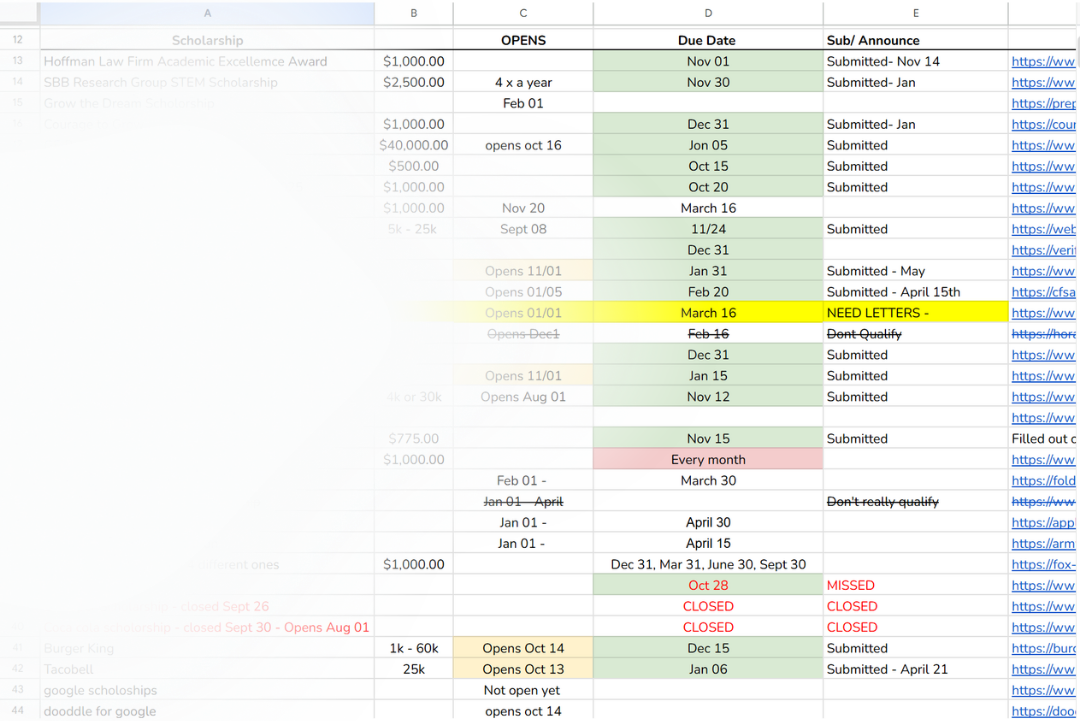
Most families think scholarship season starts after winter break. In reality, many major deadlines occur months earlier — and we nearly missed several simply because we didn’t know what we’re supposed to track. This simple scholarship tracking system helped us stop scrambling and finally feel in control of our senior year.

Why Senior Year Scholarships Feel Overwhelming
Between working full time, sports schedules, school emails, events, and graduation planning, scholarships quickly become one more thing we know is important but don’t know how to manage.
What surprised me most wasn’t the applications themselves — it was how early some of them opened and closed. We started looking in October. However, we quickly realized some deadlines had already passed.
The problem wasn’t motivation.
The problem was organization.
I didn’t need more scholarship websites. I needed a way to clearly see what existed, what was due, and what still needed attention.
Learning how to organize and track scholarships for senior year changed everything for our family.
When Should Seniors Start Applying for Scholarships?
Many scholarships open in late summer or early fall of senior year. We missed some big scholarships because of this.
You don’t need to apply to everything at once — but you do need a way to track:
- deadlines
- application links
- essay requirements
- recommendation letters
- parent financial forms
- submission status
Without a scholarship tracking system, opportunities get buried in emails, screenshots, and bookmarks. That’s exactly how families unintentionally miss scholarships.
Why I Switched to a Digital Scholarship Tracker
At first I tried to keep everything in emails and notes, but the biggest challenge wasn’t finding scholarships — it was remembering where everything was.
Some had portals.
Or required printed forms.
Some needed essays saved on a computer.
Or required parent information.
I realized I didn’t need more places to search. I needed one place that showed me the entire picture at a glance.
So I created a simple Google Sheets scholarship tracking system. Instead of searching through emails every week, we opened one document and immediately knew what needed to be our next step.
It turned scholarships from stressful into manageable.
Where I Found Scholarships to Start My List
I didn’t want to rely only on random internet searches, so I began with a comprehensive scholarship resource book that listed national opportunities and their requirements. I went through it page by page and entered each scholarship into our tracker along with the deadline and website link.
Having a central starting source helped me build an organized list instead of constantly worrying I was missing something important.
Disclosure: This post may contain affiliate links. As an Amazon Associate, I earn from qualifying purchases at no extra cost to you.
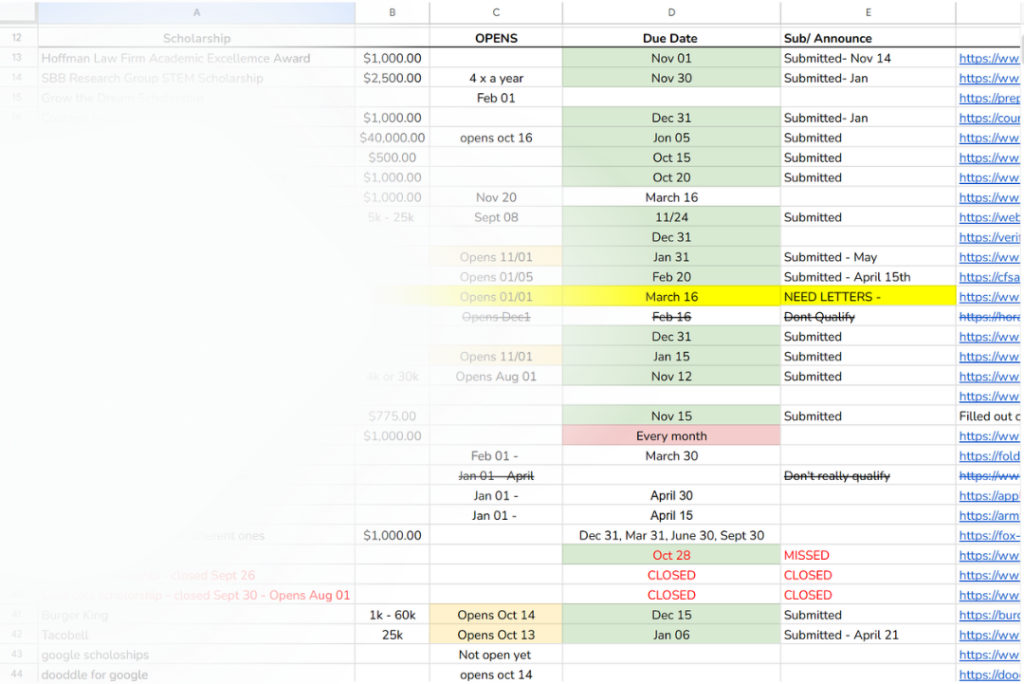
How the Scholarship Tracking System Spreadsheet Was Set Up
My tracker stayed simple on purpose. It only included information we actually needed.
Our spreadsheet columns were:
- Scholarship Name
- Website Link
- Deadline
- Requirements
- Student Tasks
- Parent Tasks
- Submitted (Yes/No)
I also added:
- a username and password tab
- an information tab for the colleges he was applying to
Instead of reopening applications and trying to remember accounts, everything was saved in one location.
At any moment, we could see:
What was coming up, in progress, or what we had completed.
That clarity alone reduced a huge amount of stress.
Because the tracker was online, we both always had access to it. If my son had time during school to work on an essay or check a requirement, he could open it and see exactly what was due. If he had a question while I was at work, I could pull up the same document and help him without waiting until that evening. We weren’t trying to remember details or search through emails — we were looking at the same information at the same time. That alone made the process much less stressful for both of us.
Separating Parent and Student Responsibilities
One of the most helpful parts of the system was clearly dividing responsibilities.
Student responsibilities
- essays
- activity lists
- submitting applications
Parent responsibilities
- financial information
- transcripts and forms
- tracking deadlines
- managing the spreadsheet
Once expectations were clear, senior year felt far less overwhelming.
Weekend 20-Minute Scholarship Check-In
Weeknights during senior year were busy for us — practices, games, homework, and just trying to get through the day. I realized quickly that trying to talk about scholarships in the middle of a weeknight usually meant rushed conversations or forgotten details.
Instead, we picked a short time on the weekend to sit down together and open the Scholarship Tracking System. No pressure and no long meetings — just about 20 minutes.
Each week we would look over:
- upcoming deadlines
- essays in progress
- anything needing a signature or transcript
- what had already been submitted
Because it happened at the same time each week, it stopped scholarships from turning into last-minute stress. We weren’t constantly reminding each other or trying to remember conversations from busy evenings. It became a simple check-in where we could see what the next step was and then move on with our weekend.
That small habit made senior year feel manageable instead of overwhelming.
What I Wish I Knew Earlier
Scholarship season does not begin in January of senior year.
Many of the larger opportunities begin months earlier. Starting early doesn’t mean doing everything immediately — it means setting up a system so you don’t miss deadlines before you even know they exist.
If you feel behind, you are not alone. Most parents learn this while living it.
Organization doesn’t guarantee every award, but it does make sure your student has the opportunity to apply — and sometimes that makes all the difference.